All You Need to Know About the Scrum Team: Accountabilities, Roles, & Responsibilities
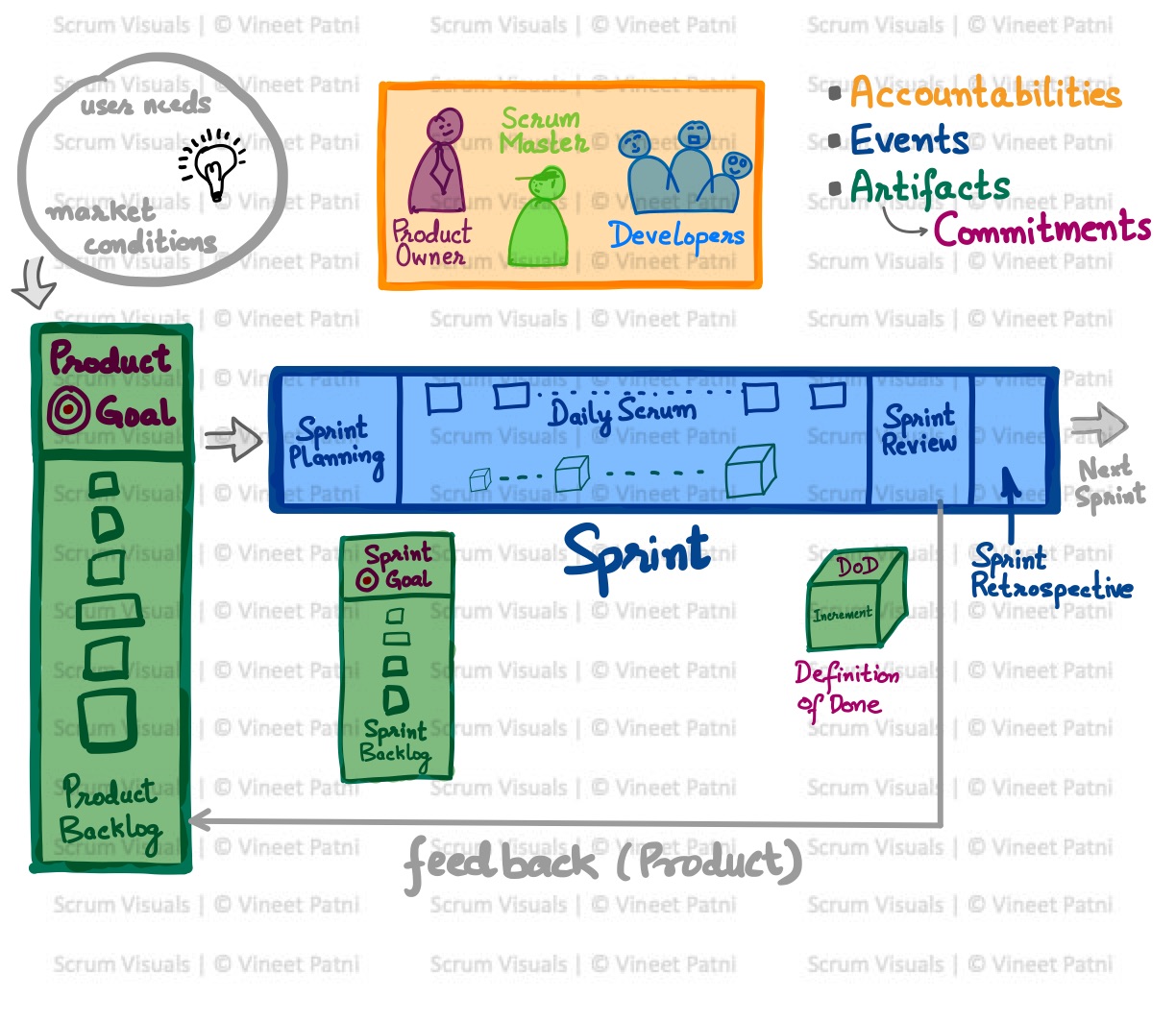
The Scrum Team is the fundamental unit of Scrum. It is a small, cross-functional (multi-disciplinary), and self-managing group of individuals working together to achieve the Product Goal. Unlike traditional teams with rigid hierarchies and silos, a Scrum Team operates on transparency, collaboration, and accountability.
The Scrum Team typically consists of three key accountabilities:
- Product Owner
- Developers
- Scrum Master
Together, they build the right product in the right way, ensuring continuous delivery of value.
Key Characteristics of a Scrum Team
Scrum Teams have three defining attributes that set them apart:
- Cross-functional: The team has all the necessary skills to deliver value without depending heavily on outsiders.
- Self-managing: They decide how best to organize and accomplish their work.
- Empowered: Every member is trusted to make decisions that move the product forward.
They share common goals, respect each other’s contributions, and work collectively to deliver high-quality outcomes.
The Three Accountabilities in a Scrum Team
1. The Product Owner
The Product Owner (PO) is accountable for optimizing or maximizing the value of the product. Their focus is on building the right product, ensuring that the team works on features that truly matter to customers and stakeholders, and also that the team does NOT work on less valuable ones.
Key responsibilities of the Product Owner include:
- Clearly articulating the Product Goal.
- Creating, refining, and ordering the Product Backlog based on value, urgency, and complexity.
- Ensuring transparency so that everyone understands the backlog and its priorities.
- Making decisions that guide the development effort and respecting stakeholder needs.
💡 Important Note: The Product Owner is always a single individual, not a committee or group. For one product, there must be only one Product Owner, for smooth decision making and a clear accountability.
2. The Developers
The Developers are the engine of the Scrum Team. They are the “co-creators,” and are accountable for building the product correctly and ensuring it meets the agreed quality standards. Unlike traditional structures, they determine how to achieve the Sprint Goal—giving them autonomy and ownership over delivery.
Key responsibilities of Developers include:
- Creating a plan for the Sprint Backlog.
- Ensuring adherence to the Definition of Done (DoD), thereby building quality in the product Increments.
- Continuously improving and adapting to changing or evolving requirements.
- Investigating defects and proactively solving problems at every step.
- Holding each other accountable and upholding team spirit.
3. The Scrum Master
The Scrum Master is a true leader and coach who ensures the team’s overall effectiveness. They create an environment where the team can focus, adapt, and succeed by fostering collaboration, trust, and mutual respect.
Key responsibilities of the Scrum Master include:
- Coaching the team in cross-functionality, self-management, and Agile principles.
- Ensuring Scrum events (like Sprint Planning, Daily Scrum, Sprint Review, and Retrospective) are effective and valuable.
- Removing challenges or roadblocks that may slow down progress.
- Helping the Product Owner in backlog management and communicating goals effectively.
- Supporting stakeholders and bridging gaps between business needs and team capabilities.
In essence, the Scrum Master ensures that the Scrum framework is followed while encouraging continuous improvement and positivity.
Why the Scrum Team Works
The success of a Scrum Team lies in the synergy of all three accountabilities. Each plays a distinct but complementary role:
- The Product Owner ensures the team is building the right product.
- The Developers ensure the product is built in the right way.
- The Scrum Master ensures the process enables both to do it effectively.
Without any one of these roles, the Scrum Team cannot fully achieve its potential. Together, they ensure iterative delivery, fast feedback loops, and continuous value creation.
Parting Words
A Scrum Team is not just a collection of individuals—it’s a unified, cohesive system designed to collaborate, adapt, and deliver. By eliminating rigid hierarchies, embracing shared accountability, and focusing on value delivery, Scrum Teams enable organizations to thrive in today’s dynamic and competitive environment.
For Agile projects to succeed, the Scrum Team must embrace its core values—focus, openness, commitment, courage, and respect—and continuously work towards the Product Goal.
Upcoming Trainings


← Scroll to see more →
Related Posts