Multiple Increments in a Sprint: Driving Continuous Value Flow in Scrum
Agile development is all about delivering value early, frequently, and consistently. At the core of this principle lies the Increment in Scrum—a tangible step toward achieving the Product Goal. Unlike traditional models like Waterfall, where the real value (“Product or Solution”) is delivered at the very end, Scrum allows for multiple increments during a Sprint, enabling faster feedback, better adaptability, and more satisfied customers.
Incremental and Iterative Development in Action
Scrum combines two powerful concepts:
- Incremental Development – Each increment adds usable functionality to the product.
- Iterative Development – The product evolves through continuous refinement, adaptation, and learning from each Sprint.
For example, in the first Sprint, the team might deliver a basic end-to-end skeleton of functionality. Over subsequent Sprints, they continue to add features, refine performance, and improve usability—always ensuring the product is integrated and potentially shippable at the end of each iteration.
What is an Increment in Scrum?
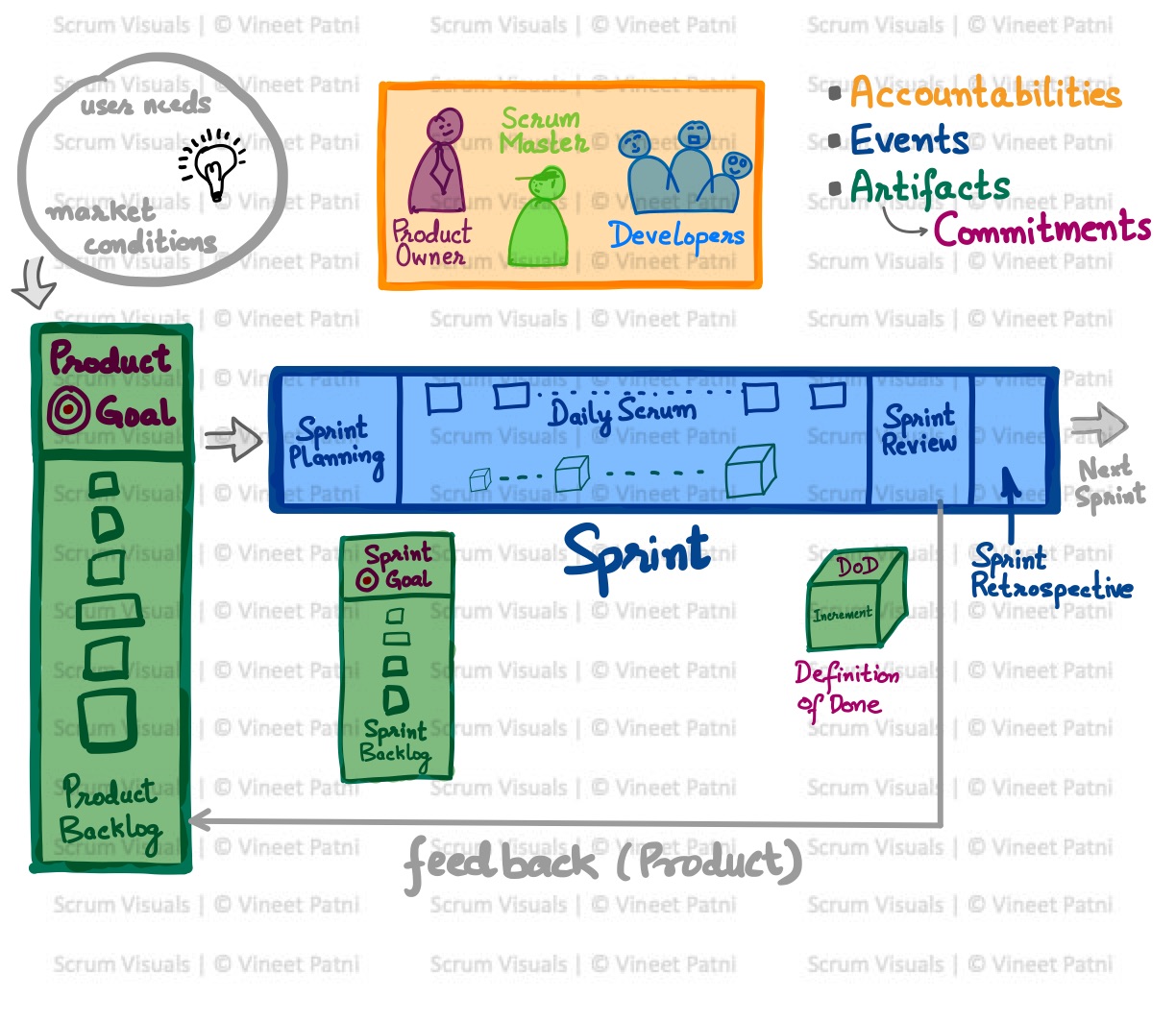
An Increment is more than just a piece of work—it is a functional, usable addition to the product that builds on all previously completed increments. Each Increment is rigorously tested, integrated, and must meet the Definition of Done (DoD) before it can be considered complete or valuable.
Key points to remember:
- An Increment is created as soon as a Product Backlog Item (PBI) meets the Definition of Done.
- Increments must be usable—even if not yet released.
- At the Sprint Review, the cumulative sum of all increments is inspected with stakeholders, and the future of the product is discussed.
The Sprint Review is not a barrier—value can be released anytime during the Sprint once an increment is done.
The Role of the Definition of Done
The Definition of Done (DoD) ensures transparency and alignment across the team. It defines the quality criteria that must be met for work to be considered complete.
- If a PBI does not meet the DoD, it cannot be included in the Increment.
- Instead, it is returned to the Product Backlog for re-prioritization.
- In organizations with multiple Scrum Teams working on the same product, a common DoD must be agreed upon and followed to ensure consistency.
This shared understanding fosters trust, clarity, and accountability across the development effort.
Why Multiple Increments in a Sprint?
While many teams assume only one increment is created per Sprint, Scrum allows for multiple increments if items meet the Definition of Done. This provides:
- Faster value delivery – Stakeholders don’t need to wait until the Sprint ends.
- Continuous feedback loops – Early increments provide real-world insights.
- Reduced risk – Testing and integration happen continuously, lowering the chance of late surprises.
- Higher adaptability – Teams can pivot based on customer feedback received mid-Sprint.
Benefits of Multiple Increments per Sprint
When teams embrace multiple increments, they unlock several advantages:
- Faster innovation – Early releases mean quicker insights.
- Customer-centricity – Frequent increments lead to improved satisfaction.
- Continuous improvement – Teams can experiment, learn, and adapt.
- Market responsiveness – Organizations can react to change faster than competitors.
Conclusion
In Scrum, an increment is not just a deliverable—it’s a promise of value. By creating multiple increments within a Sprint, teams can deliver customer value earlier, gather actionable feedback faster, and continuously improve their product.
The key lies in discipline around the Definition of Done, strong collaboration, and a commitment to transparency. Done right, multiple increments in a Sprint become a powerful driver of agility, innovation, and long-term success.
Upcoming Trainings









← Scroll to see more →
Related Posts